
When The Retirement Questions First Appear
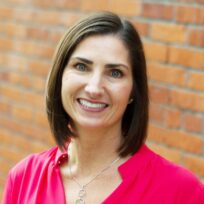
At 60, I’m four months away from my last day as a Financial Advisor and Partner at Brighton Jones — a role that has shaped my days, my relationships, and my sense of purpose for years. It’s work I truly love. And yet, as I prepare to step away, I keep reflecting on how I got here, not just where I’m going next.
I’ve been getting a lot of questions about how I’m feeling, whether I’m excited, and what I’m going to do after retirement. Many people ask when I decided to retire. Almost no one asks how. Did I hit a certain age or level of financial security? Was there a specific event or benchmark achieved?
Everyone’s journey is unique, and to better understand how I arrived at my decision and the actual date, I think it’s helpful to understand my background.
Starting over at 38
School was always difficult for me. I struggled to get good grades despite my efforts, and after 2½ years of college with no sense of direction, I left to take a job in sales. I got married at 25, had two daughters at 31, and spent the next seven years as a stay-at-home mom — which I loved and considered my true calling.
Then my marriage ended. At 38, I had to reenter the workforce with no professional skills and two young daughters who still needed me. A friend told me about a small financial planning firm looking for part-time help. I presented my very weak resume and was hired to answer phones and file. It broke my heart not to be home with the girls full-time, but the firm gave me flexibility — I could start after the girls went to school and be home to pick them up.
Over the next decade, I worked my way from receptionist to operations, earned my Series 7, 63, and 66 licenses, and eventually decided to pursue my CFP®. The thought terrified me — the exam had a 64% pass rate, and given my history with school, I had no confidence I could pass. But I studied two hours every night and six hours every weekend for a year and a half. My husband made dinner every night and brought it to me at my desk. My daughters cheered me on with every module I passed. When I also went back to finish my bachelor’s degree, my husband joked that he had three girls in college.
At 50, I finally became a CFP® professional. By the time I joined Brighton Jones in 2018, I’d spent a decade proving I belonged. I became a Lead Advisor, then a partner. I loved the work — the clients, the learning, the mentoring.
So, when the question of retirement first appeared in 2022, it felt… premature. Uncomfortable. Maybe even a little ungrateful.
Family, geography, and the pull to be present
A series of life events compelled me to begin thinking about a retirement date. In 2022, our first grandchild was born to our daughter and son-in-law in Austin, Texas — a beautiful baby girl. They began cultivating deep roots in Austin, and it was evident that they likely would not be moving back to the Pacific Northwest. Participating in our grandchildren’s lives is very important to us. With the time change, travel from Seattle to Austin essentially took a full day, so a short weekend visit was only possible by taking time off work.
Around this time, my stepdad, with whom I was extremely close, was diagnosed with Alzheimer’s. Fortunately, my mom and stepdad lived close to us, so we were able to see them often, but my mom became the primary caregiver and was eventually responsible for paying the bills for the first time in her life. It was evident she needed help.
Our other daughter and her husband were planning to settle in Spokane, Washington, where he would finish out his residency in Physical Medicine and Rehabilitation. As we had a clearer picture of the future for our daughters and our extended family, I felt an increasing pull to spend more time together. While we weren’t close enough to visit regularly, I wanted to be present for major events in the kids’ and grandkids’ lives. I wanted to be available if someone got sick and needed help. I wanted to spend as much time with my stepdad as possible and be available to help my mom.
At the same time, I was continuing to love my work. It was exciting to learn something new every day, to be a part of a dynamic firm that was at the forefront of the industry, to mentor others, and to watch our clients progress toward achieving their goals. I was far from feeling burned out and still felt I had a lot to contribute. I was 56 years old and not ready either financially or emotionally to retire, but I was considering targeting a date to aim for. I thought about exploring scaling back, but I know myself, and it would be hard for me to draw boundaries with my time, and part-time work would likely look more like full-time for me.
Planning for vocational freedom
My husband is self-employed and has some control over how much work he wants to take on, as well as how much flexibility he has in his schedule. While we discussed him ramping down, he would likely continue working to a certain extent. We spent many nights going over our financial plan, looking at different iterations of our own Vocational Freedom Analysis — the same framework we use with clients to map financial readiness against life goals.
Most people think of 65 as the average age to retire, and in the back of my mind for many years, this was an arbitrary date for my own retirement. However, at the time, working 9 more years felt a little too far away. Our discussions kept circling back to me retiring at around age 63. It was still far enough away that I didn’t feel committed, yet close enough that it felt like we could begin making plans for what this new chapter in life would look like. Besides, we were only “talking” about it, and the date could always change, right? As long as the conversations were just between us, nothing was set in stone.
My manager would occasionally ask me what retirement “looked like” (aka when was I going to retire!), and I would say that it was undetermined, not wanting to paint myself into a corner. I was 100% committed to my work and concerned that any discussions about a retirement date would imply I was shifting my focus away from work. While I was thinking about what vocational freedom might look like, I wasn’t ready to talk about it.
Living in the tension
The pull between vocational freedom on one side and advising on the other would go on for a while. Over the next couple of years, it intensified. Interestingly, I felt a little guilty for not wanting to retire right away. Alzheimer’s was becoming more evident in my stepdad, and our granddaughter was passing milestones, but I still had such a passion for my work and wanted to continue to give as much as I could. The tension wasn’t about money. It was about identity. About time. And which version of myself I was supposed to prioritize.
I kept waiting for certainty to arrive and for the answer to announce itself.
I asked my mom one day how she knew she was ready to retire, and she said, “You just know.”
At that time, I didn’t know.
About the Author: Kristine McHugh, CFP®, is a Lead Advisor at Brighton Jones. She helps high-income professionals and families design tax-efficient investment strategies and retirement plans aligned with their principles and long-term goals.
Disclosure: This content is provided for informational and educational purposes only and should not be construed as personalized investment advice or a recommendation of any specific product, strategy, or course of action. The experiences shared reflect the personal views of the author and are not necessarily representative of the experiences of all Brighton Jones clients. Past experiences are not indicative of future results, and no guarantees are being made. For advice tailored to your individual circumstances, please consult your adviser